NEW – International Construction Projects
Let’s Discuss Your Project – Book Free Consultation or Call Now

A premium bathroom depends on more than its visible finishes. The planning and installation matter just as much. Luxury bathroom fitters in Islington can coordinate tasks such as removing old fittings, installing new ones, tiling and finishing the room, with the agreed scope set out before work begins. Older properties and newer flats can bring different practical challenges, from timber floors and drainage to compact en-suites and waterproofing.
Choosing a fitter is easier when you know what the work involves and which details to look for. This guide explains the typical scope of a bathroom renovation, the Islington neighbourhoods local fitters serve, and how to assess qualifications, registration, insurance and previous installations.
You’ll also learn how a project can progress, from discussing the work and finishes to planning the installation. Whether you’re considering a complete refit or updating part of the room, a clearly defined scope and organised project management help keep the process on track from the outset.
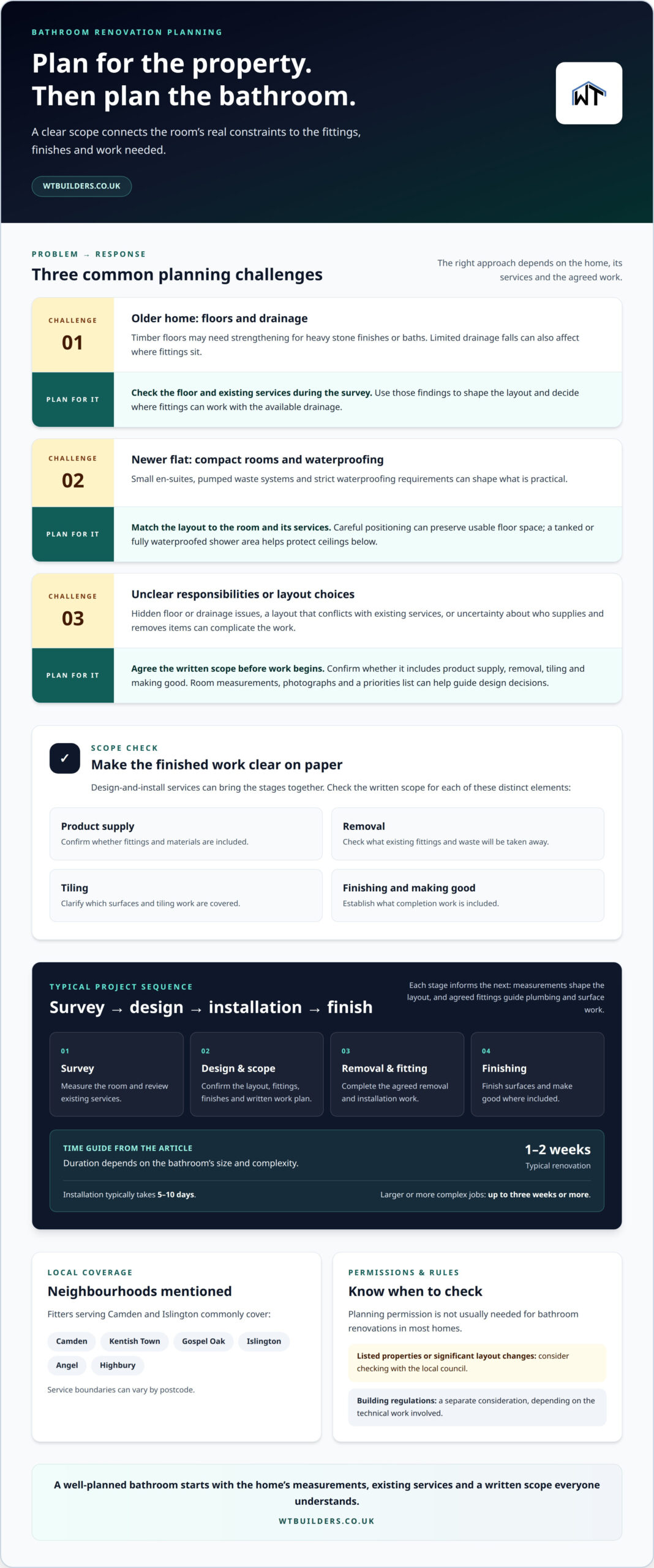
Bathroom fitting can include design consultation, removal, installation and finishing. In Islington, the right plan should account for the practical demands of each property, whether it’s a period home or a modern flat. It should connect the room’s measurements with the chosen fittings, storage, lighting and surfaces. In a compact bathroom, for example, carefully positioning the shower, basin and wall storage can help preserve usable floor space.
Design discussions turn preferences into decisions about layout and materials. A showroom or design studio visit can help compare tile finishes, taps, basins and shower fittings in person. Bring room measurements, photographs and a clear list of priorities, such as easier cleaning or more storage. A 3D design visualisation can then show how proposed fittings work together, helping reveal awkward clearances or competing finishes before installation begins.
When comparing fitters, look for a design-and-install service that explains what the written scope covers, including product supply, removal, tiling and finishing. These are distinct parts of a project, so a detailed scope makes it easier to understand what the completed work includes. The design should suit the property and its dimensions, rather than simply reproduce a showroom display.
Older Islington properties can require attention to timber floors and drainage falls. Floors may need strengthening to support heavy stone finishes or baths, while limited drainage falls can affect where fittings sit. Newer flats can present different constraints, including small en-suites, pumped waste systems and strict waterproofing requirements. A tanked or fully waterproofed shower area helps protect against water reaching ceilings below.
What can complicate a bathroom renovation? Hidden floor or drainage issues, a layout that conflicts with existing services, and unclear responsibilities for supply or removal can all cause problems. Agreeing the scope before work starts helps establish who is handling each element. Planning permission is not usually needed for bathroom renovations in most homes, but listed properties or significant layout changes may warrant checking with the local council. Major building changes will most likely need planning permission, with some exceptions, according to the UK Government. Building regulations are a separate consideration, depending on the technical work involved.
How do reviews and workmanship guarantees compare? One local sample reports an average rating of 10 out of 10, based on 195 customer reviews from a randomly selected Islington postcode. Ratings describe that sample; workmanship guarantee terms vary, so compare the written conditions alongside examples of completed installations.
Look for Islington fitters offering a design-and-install service whose written scope confirms that product supply is included. Check separately whether it covers removal, tiling and making good.
Bathroom projects in Islington can range from targeted updates to complete renovations. The work plan depends on the room, the property and the finishes you choose.
A refurbishment might update selected fittings or renew the whole room, including removal, installation and finishing. Full-service fitting can coordinate the stages, from agreeing the layout and finishes to fitting sanitaryware and completing surfaces. Before work starts, the written scope should clarify whether it includes product supply, waste removal, tiling and making good. This gives you a clear view of what the finished bathroom covers.
Bathroom fitters serving Camden and Islington commonly cover Camden, Kentish Town, Gospel Oak, Islington, Angel and Highbury. The range includes established streets and modern flats, where access and room layouts can differ. Service boundaries can vary by postcode, so the address helps establish whether a project falls within a fitter’s area. A property in Highbury, for example, may have different access arrangements from a flat near Angel.
A showroom can help you compare finishes and fittings in person, while the service area determines where installation work is carried out. The Islington showroom is open Monday to Friday, 9.00am to 5.00pm, and Saturday, 9.30am to 5.00pm. Bus routes 38, 56, 73, 341 and 476 pass the showroom. Its location is useful for viewing options, but does not define every fitter’s coverage across London.
Before a design discussion, list your priorities: perhaps a walk-in shower, more storage or a particular style. This makes it easier to compare suitable fittings and surfaces. The chosen materials and layout can then inform the project scope. Keep selections aligned with the property’s dimensions, especially where a compact bathroom limits the available options.
A renovation typically moves from a property survey to a confirmed design and written scope, followed by removal, installation and finishing. Each step informs the next: measurements shape the layout, while the agreed fittings guide plumbing and surface work. A bathroom renovation typically takes 1-2 weeks, depending on size and complexity. Bathroom installation typically takes 5-10 days; larger or more complex jobs may take up to three weeks or more.
During the survey, room dimensions and existing services help shape the proposed work. The design and scope establish which fittings and finishes are included. Installation then covers the agreed removal and fitting work, followed by finishing and making good where included. If you’re planning a local project, explore bathroom renovation options to consider how the work could suit your home.
A renovation portfolio can help you assess how a fitter approaches different rooms, layouts and finishes. Look beyond polished final photographs: useful examples show the original bathroom, the completed space and the work that connects them. A period home may call for a different design approach from a compact flat in Highbury. Comparable projects can help you consider how a fitter’s experience relates to your property.
Pay attention to each room’s proportions. A photograph of a spacious bathroom tells you little about fitting a shower into a narrow room. Look for examples showing how the basin, shower, storage and doorways work together. In a small en-suite, for instance, a wall-mounted basin and carefully positioned shower can preserve clear floor space. A useful portfolio makes the design choices visible, not just the decorative finish.
Materials deserve close attention too. Check how tile edges meet corners, how surfaces align around fittings, and whether the finish looks consistent across the room. A close-up of a tiled niche or basin splashback can reveal more than a wide-angle photograph. Images of stone, glazed tiles or patterned surfaces show how different materials come together. These details help you assess the finish across different parts of an installation.
Before-and-after images are most useful when they explain the project’s scope. Compare the original layout with the finished room: did the work update fittings, change the arrangement or transform the whole space? A clear portfolio connects the visible result with practical decisions, such as adding storage without obstructing the route to the shower. Captions describing the work can help distinguish a full renovation from a surface-level refresh.
Use examples to guide a focused discussion about your priorities. Choose a project with a similar room size or style, then note what appeals to you: the colour palette, the balance of open and enclosed storage, or the lighting placement. Discuss how those ideas could suit your bathroom’s dimensions and existing layout. This keeps the conversation grounded in specific features rather than broad descriptions such as “modern” or “luxury”.
A portfolio shows past work, but it does not replace a defined project plan. Consider whether the examples demonstrate consistent workmanship across different materials and room types. A well-documented installation gives you practical points to discuss, from tile layout to fixture positioning. Those details help clarify the finish you want and the decisions to settle before work begins.
If you rent in Islington, get your landlord’s approval before planning major bathroom repairs or renovations. Clarify permission before making decisions about changes to the room.
For bathroom work, qualifications should match the tasks involved. Plumbing, carpentry and tiling each require practical knowledge, especially when a renovation combines new pipework, floor preparation and detailed finishes. An NVQ or City & Guilds qualification in the relevant trade can indicate formal training. The key is to match the person’s skills to the work planned, rather than relying on a general title such as bathroom specialist.
Some tasks require specific registration. Gas work should be carried out by a Gas Safe registered tradesperson. Electrical and plumbing work should also be handled by appropriately qualified tradespeople. A bathroom project may involve several specialists, so establish who is responsible for each task. For example, fitting a heated towel rail may call for different skills from installing a basin or laying tiles.
Useful checks when assessing a fitter include:
TrustMark is a government-endorsed scheme homeowners can look for when assessing a fitter. Scheme membership is one part of the picture, not a substitute for checking that the people carrying out specialist work have suitable qualifications and registration. For a bathroom renovation that also involves a kitchen or wider property work, make sure the skills and responsibilities for each area are clearly understood.
Insurance matters because renovation work takes place inside your home and may affect existing surfaces, fittings and services. Ask for evidence of cover and understand what it applies to before work begins. WT Construction Services is fully licensed and insured. Reviewing completed installations can also help you assess workmanship. A previous project with similar tiling or a comparable shower layout gives you a more useful basis for comparison.
Compare more than one written quote, and consider the detail as well as the total. Each quote should describe the proposed work, materials, removal and finishing so you can identify differences in scope. Confirm availability and accreditations directly before booking. If one quote includes tiling and disposal while another excludes them, those offers are not equivalent. A clear comparison helps you judge the planned work on its actual terms.
Keep the project information together: the agreed scope, the people responsible for each trade, relevant qualifications and insurance details. This creates a practical record if the work includes separate plumbing, electrical or finishing stages. It also makes it easier to see who is handling each element, from the first installation task through to completion.
For homeowners in Islington and the wider North London area, property type and project scope are useful starting points when discussing a bathroom renovation. A fitter’s working area may not follow obvious local boundaries, so share the property address when making an enquiry. This helps establish whether the project is within the area served.
Luxury bathroom fitters in Islington may work across several neighbourhoods, while others cover a smaller patch. A showroom address alone doesn’t define installation coverage. The Islington showroom is passed by bus routes 38, 56, 73, 341 and 476, but its location doesn’t establish which postcodes a fitter serves. Separate the place you can visit from the places where work is carried out.
For a home in Highbury, Angel or Camden, location is only one part of the project discussion. The property type and scope matter too. A bathroom in a period house may differ from one in a newer flat, even within the same neighbourhood. Share the address and a concise description of the planned work, such as a full refit or an updated shower area. This gives the team useful context for discussing the project.
Use these practical steps to narrow down local coverage:
These details make discussions about travel, property access and project planning more specific. For example, a flat near Angel and a house in Gospel Oak may have different access arrangements, even when both sit within a fitter’s broad service area. An address also prevents confusion between Islington neighbourhoods and similarly named places elsewhere in London.
Choosing luxury bathroom fitters in Islington starts with matching the property location and renovation needs. State the postcode, property type and work required together, so the fitter can consider them as one enquiry. If you’re planning a project in Islington or a nearby neighbourhood, discuss your bathroom project with a local team.
When the planned work includes a shower area, make waterproofing part of the initial project discussion. HG1 London advises specifying a tanked or fully waterproofed shower area to help prevent ceiling leaks. Include this requirement alongside the property address and the scope of work, so the fitter can consider it when assessing the bathroom project.
Even if you’re updating a shower area rather than refitting the whole bathroom, describe your waterproofing requirements clearly. Ask how the proposed shower area will be waterproofed, and keep this separate from decisions about finishes or layout. Clear wording helps define the work before discussing the project in detail.
WT Construction Services provides bathroom fitting for homeowners planning an update or a complete bathroom renovation. The work can also form part of a wider full property renovation when several rooms need coordinated improvements. A clear brief covering the room, preferred fittings and desired finish helps shape the project around your home and priorities.
For an Islington bathroom, the next step is to discuss the scope, the work required and the design direction you have in mind. WT Construction Services begins with an appointment to discuss your requirements, then provides an estimate and agrees timescales. This gives you a practical starting point for planning the renovation.
Contact WT Construction Services to discuss your bathroom project.
Choosing luxury bathroom fitters in Islington is an opportunity to shape more than the room’s appearance. Think about how you want it to work each day, from morning routines to storage and cleaning. A short list of priorities can help turn design choices into a space that feels considered and practical. You can also decide whether the bathroom project fits into a broader plan for your home.
WT Construction Services also undertakes house extensions, loft conversions and full property renovations. If your plans reach beyond the bathroom, these services can bring related improvements together under a wider project brief. Keeping your priorities clear gives the conversation a useful starting point, whether you’re planning one room or changes across your property.
Take the next step when you’re ready to discuss the space, the finish and the work involved. Contact WT Construction Services to talk through your bathroom project and explore a considered way forward.
WT Construction Services is fully licensed and insured. Qualifications should match the work being carried out: plumbing, carpentry and tiling require relevant trade skills, while gas work calls for Gas Safe registration. The company carries out certified electrical installations alongside plumbing and heating work. Clarify which tradespeople will handle each specialist task, particularly if the design includes changes to lighting or heating.
A luxury bathroom fitting service can bring design choices and installation together, but the precise scope depends on the agreed project. WT Construction Services provides bathroom fitting, with attention to joinery, tiling and appliance integration. Design consultation can help shape a coherent layout and style, whether you prefer modern or traditional details. For example, coordinate tile choices with the basin cabinetry and shower fittings before finalising the room’s overall look.
Before proceeding, make sure the proposed work suits your property and the scope is clear. WT Construction Services starts with an appointment to discuss your requirements, followed by an estimate and agreed timescales. The team then discusses the project details before setting a start date if you decide to proceed. Bring your preferred layout, finishes and priorities to the first discussion. If you rent, get your landlord’s approval for major bathroom renovations.


Part of the group · Partners




Part of the group · Partners